
The phone rang — it was my sister, saying Dad was in the hospital. Terrified, I asked, “What happened to Dad?” Her voice trembling and trailing off, she explained, “He stumbled on his way to the bathroom and fell on the floor.”
The phone in my cold and clammy hand clattered to the floor. Without delay, I headed to the hospital and saw Dad in a wheelchair. Fear, confusion, and guilt overwhelmed me for not wanting to take on the responsibility of caring for him as a son.
The doctor explained that he had suffered a stroke, causing blockages that made it difficult for him to walk. Stress consumed me as I felt the weight of my family’s financial burden fall on my shoulders. My mother and I spent nearly a month caring for Dad in the hospital.
During his stroke, he turned into someone I barely recognized. He was demanding, often calling for things and making sharp, unreasonable complaints. When we didn’t respond quickly enough, he would curse in dissatisfaction.
After one month, we brought him home, as his condition showed no signs of improvement. One evening while cooking, my sister revealed that Dad’s abusive behavior toward Mom wasn’t new. She explained how, in one particular fight, Dad made a shallow cut down Mom’s back with a knife.
Hearing this left me speechless. A surge of anger rose inside me, along with an urge for revenge. But I quickly dismissed the thought; after all, he was my father. A heavy guilt settled in me, guilt that I hadn’t protected Mom enough. And while I wanted to blame Dad for everything, I knew that wouldn’t solve anything.
About Charlie
- Age: 24
- Ethnicity: Karen
- Country: Myanmar
School & Program
- University of Saint Joseph
- Bachelor’s, Environmental Science
- 2nd Year in Program
Goals & Dreams
- Become a researcher
- Visit Bagan
Loan Details
- Loan Amount: $4,000
- Amount Left To Fund: $3,675
- Contract Duration: 11 years
- Status: In School
At the same time, Dad’s medical expenses skyrocketed, leaving us in debt to our neighbors. He frequently pressured me to work blue-collar jobs in Thailand to cover his medical costs. Instead, I chose to stay and began working at a local civil society organization, providing healthcare in internally displaced persons’ camps, even though it paid less.
Initially, I worked solely to cover Dad’s expenses, but I soon realized I could help those who were truly in need. One afternoon, we ventured into a remote village, Myaing Gyi Ngu, where several displaced youth lived. My team negotiated with stakeholders to provide humanitarian aid, while I approached young individuals and made sure they felt comfortable. I asked about their aspirations. One shared, “I long to attend school, but I had to drop out at 13.” Another said, “I want to end domestic violence in my home.” A profound sense of empathy welled up within me.
While serving the community, I returned to my village every weekend to care for Dad and had heartfelt conversations with him, hoping to reshape his behavior. Mom remained patient, having long accepted his ways. Over that year, I grew curious about the prevalence of domestic violence and the lack of educational rights in rural areas. I regularly call my mom and sister to offer a safe space for them.
With careful consideration, I realized that the root cause of domestic violence is often tied to a lack of education. A spark inside me wants to tackle the root issues fueling domestic violence while educating and empowering people to keep pursuing their dreams, because I believe education is the solid foundation to address these issues and make a positive impact.
Written by Charlie with editing assistance from Zomia’s volunteer editors.
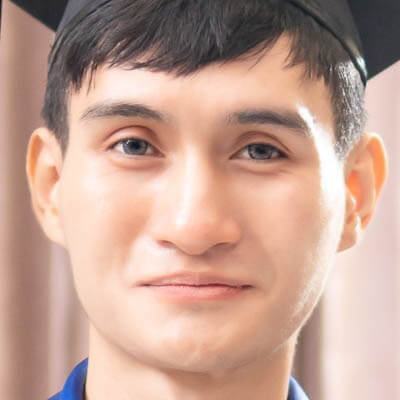
Charlie
“A spark inside me wants to tackle the root issues fueling domestic violence while educating and empowering people to keep pursuing their dreams…”